Two Births, One Health Centre: A Mother's Experience of Kirumba's New Maternity Ward
When Joyce Nakimbugwe returned to Kirumba Health Centre III to give birth to her second child, she found a very different maternity ward from the one she remembered.
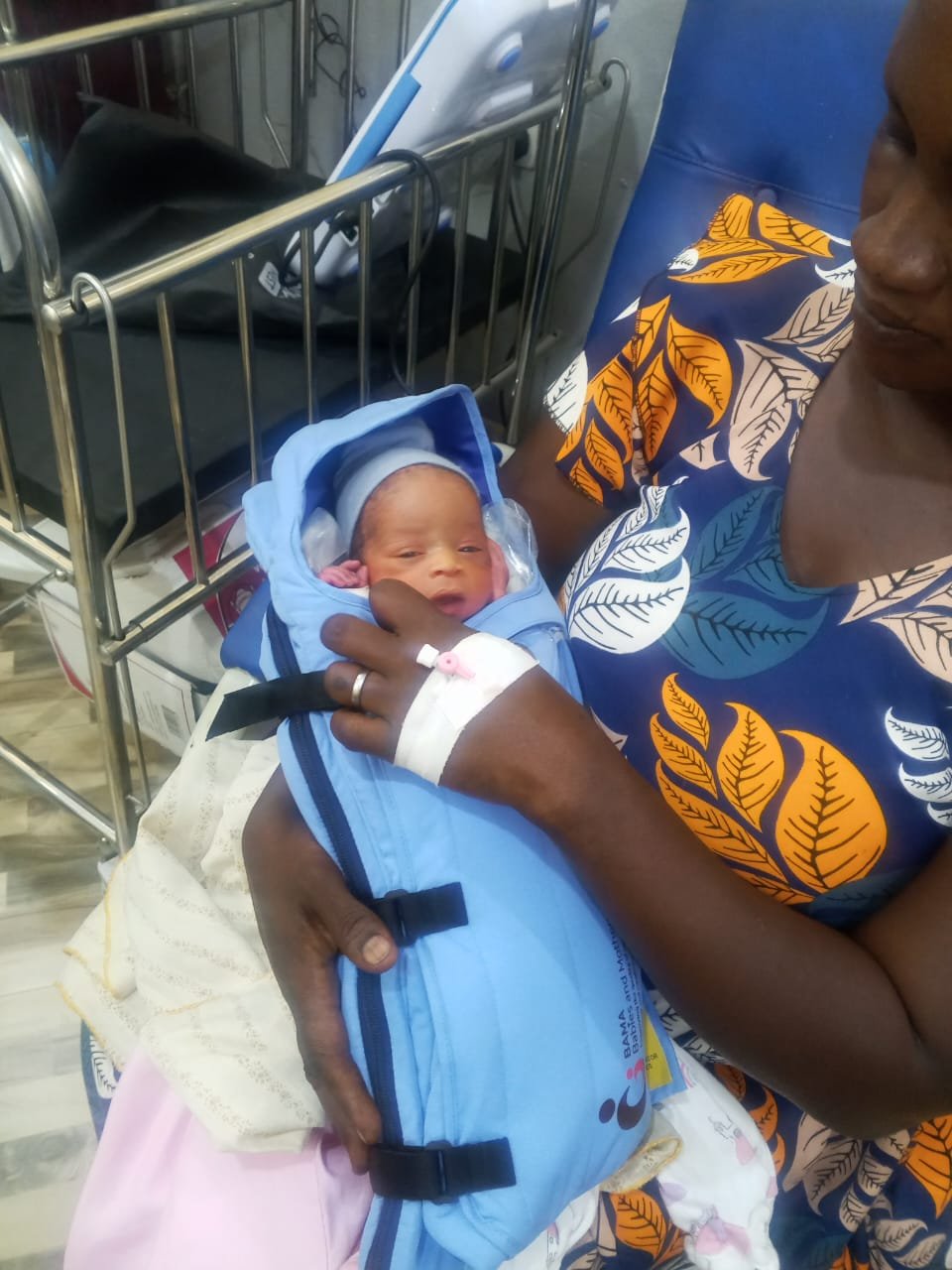
At 2:00 a.m. on October 4, 31-year-old Joyce Nakimbugwe welcomed her second child at Kirumba Health Centre III in Kyotera District, Uganda.
She had arrived six hours earlier, travelling from Kyengubu Village in Lwanda. It was a familiar journey. Joyce had attended antenatal care at Kirumba and had given birth to her first child at the same health centre.
But this time, something was different.
“I delivered my first child at this facility, but that was in the old maternity space, which was too small,” Joyce recalls. “I love the place. It is spacious and clean, and we are not congested like before.”
Just 16 days earlier, on September 18, Kirumba had officially opened its new maternity ward. Joyce was among the first mothers to experience what the investment meant for women giving birth there.
The same health centre, a different experience
For Joyce, choosing Kirumba was straightforward. The facility was close to home, and she already knew the health workers through her antenatal visits.
“I chose Kirumba because it is close to my home, and I have also been coming here for antenatal care,” she explains. “I was confident that I was going to receive good services here.”
That confidence matters.
For women living in rural communities, having access to maternity services nearby can make a significant difference, particularly when labour begins at night or complications arise unexpectedly.
But access is only part of the equation. The environment in which women receive care matters, too.
During Joyce's first delivery, the maternity space at Kirumba was small and often congested. Health workers had limited room to attend to mothers, and different maternity services had to share the available space.
When she returned for her second delivery, she found new beds, better lighting, a dedicated delivery room and more space for mothers and health workers.
The difference was immediately noticeable.
More than a new building
The new maternity ward was developed through a partnership between Babies and Mothers Alive (BAMA), Kyotera District Local Government, Kirumba Subcounty, community members and Rotary partners.
It provides dedicated spaces for antenatal care, childbirth and postnatal services, alongside equipment to strengthen maternal and newborn care.
For Joyce, however, the significance of the investment was much simpler: she could give birth in a clean, spacious environment, close to her family and community.
Her experience also illustrates why investments in maternal health must go beyond ensuring that women reach a health facility.
Once a mother arrives, she needs an environment where health workers have the space, equipment and support to provide appropriate care, and where she can be treated with dignity.
At Kirumba, the new maternity ward is an important step towards making that possible.
A new beginning for mothers in Kirumba
Joyce's experience offers an early glimpse of what the new ward can mean for families in the surrounding communities.
It is too soon to determine the long-term impact on maternal and newborn health outcomes. Those improvements will depend on continued investment in skilled health workers, essential supplies, equipment maintenance and quality care.
But for a mother who experienced both the old and new maternity spaces, the change is already tangible.
“I am happy that we have this new facility near our community,” Joyce says. “It is going to help other women because now there is no reason to go far for delivery and maternal health services when we have this facility here.”
Two children. Two deliveries. The same health centre.
And for Joyce, a very different experience of bringing a new life into the world.
Learn more about the new Kirumba maternity ward and the partnerships that made it possible.