How BAMA Helped Build FREO2 into an Independent Health Partner
What began in 2018 as a partnership to strengthen access to medical oxygen has grown into a story of institution-building. Over eight years, Babies and Mothers Alive Foundation (BAMA) supported FREO2 establish the systems, leadership and organizational capacity to become an independent health organization in Uganda. Today, that partnership enters a new chapter as two organizations continuing to advance quality healthcare together.
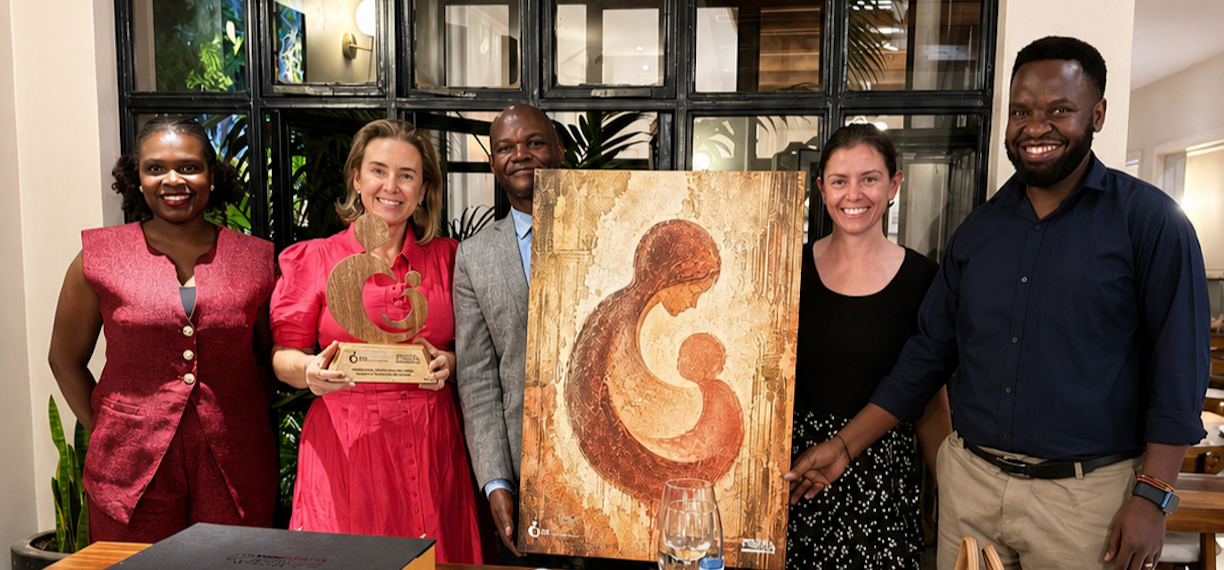
With 79 health facilities supported across Uganda through regional hubs in Mbarara and Lira, FREO2 has expanded access to lifesaving oxygen for newborns and children. As the organization begins operating independently in Uganda, both FREO2 and Babies and Mothers Alive Foundation (BAMA) are marking the moment as the successful outcome of a solid partnership.
Behind that growth lies an eight-year partnership that extended far beyond technical support. From the outset, BAMA provided the legal, financial, human resource and operational systems that enabled FREO2 to establish itself in Uganda while deliberately building the organizational capacity needed for eventual independence. BAMA invested in creating an institution capable of standing on its own rather than simply hosting the program.
The partnership began in BAMA-supported health facilities in Rakai, Kalisizo and Kakuuto, where unreliable oxygen supplies often meant the difference between life and death for newborns and children. Those early installations became the foundation for a model that has since expanded nationwide, bringing dependable oxygen services to dozens of facilities where access had historically been limited.
Reflecting on the milestone, Máire Ruane, Chief Executive Officer of FREO2 Foundation and Enterprise Fellow at the University of Melbourne, said the organization’s journey in Uganda was built on BAMA's willingness to invest not only in programs, but also in people and systems.
“FREO2's journey in Uganda began with BAMA. You supported our very first work and walked with us through the finance, HR, legal and governance foundations that a young organization needs but rarely knows how to build alone. You did not just carry those functions for us-you taught our team to carry them. Because of that early trust and steady mentorship, we are now working in 79 facilities across Uganda, with children receiving oxygen who may not have accessed it otherwise. As FREO2 begins operating independently and our partnership takes a new shape, we carry forward the same spirit of collaboration,” said Máire.
For BAMA, the transition reflects a broader philosophy of systems strengthening and building organizations that continue creating impact long after the initial partnership evolves.
Executive Director Dr. Daniel Murokora said the collaboration demonstrated that lasting improvements in healthcare require investment not only in technology, but also in governance, leadership and institutional capacity.
“At BAMA, we value partnerships that are practical, responsive and rooted in a shared commitment to saving lives. We invested in FREO2 the way we invest in health systems: not by doing the work for others, but by building the capacity to do it well and to keep doing it. Mentoring the FREO2 team in governance, leadership, human resource and financial management was as important as any oxygen plant we helped install. This phase is closing, but the relationship is not. We look forward to staying connected and to finding new forms this partnership can take,” Dr. Murokora
The transition also illustrates an approach to development that places sustainability at its center. Rather than creating permanent dependence on external support, this partnership from the beginning was designed to enable FREO2 to establish its own governance structures, operational systems and local leadership, and ensuring that its work could continue independently while maintaining collaboration with BAMA.
Reliable medical oxygen remains one of the most essential, yet least consistently available, resources in many health facilities, particularly for newborn and pediatric care. A 2025 research published in The Lancet Global Health has shown that Uganda has made significant progress in expanding pulse oximetry coverage and oxygen availability in recent years, demonstrating that sustained investment in health systems can deliver measurable improvements. BAMA's partnership with FREO2 contributed to that broader effort by helping build the organizational systems and institutional capacity that enabled FREO2 to grow from an emerging initiative into an independent organization supporting 79 health facilities across Uganda.
Although the hosting arrangement has formally concluded, both organizations see this transition as the beginning of a new chapter rather than the closing of one. Built on eight years of shared learning, mutual trust and a common commitment to strengthening Uganda's health system, the partnership now moves forward in a different form, one defined less by institutional dependence than by two organizations working alongside each other as equals.