Beyond the Reach of Ambulances, a Lifeline Takes Shape in Kasese's Mountains
In the foothills of Uganda's Rwenzori Mountains, residents once relied on bedsheets and wooden carriers to transport pregnant women and seriously ill patients. Community stretchers introduced through BAMA’s Mama Rescue Project are helping families reach healthcare in places inaccessible to conventional vehicles.
In Kilembe Sub-county, on the steep slopes of Uganda's Rwenzori Mountains, residents have long had a name for the improvised carrier used to transport people who are too ill to walk. They call it the helicopter. Made from pieces of wood and a bedsheet, the carrier allows neighbors to carry patients along narrow mountain paths where conventional vehicles cannot operate.
For Ms. Nzyabake Raphaelina, a Village Health Team (VHT) member in Kisanga Village, Kibandama Parish, this was a familiar response to medical emergencies. “Before, we used to carry pregnant women on bedsheets and mattresses,” she recalls. She supports 35 households, visiting pregnant women, monitoring newborns, and helping families recognize signs of illness that require medical attention. Yet when someone needs urgent care, knowing where to seek treatment is only part of the problem. Families must also find a way to get the patient there.
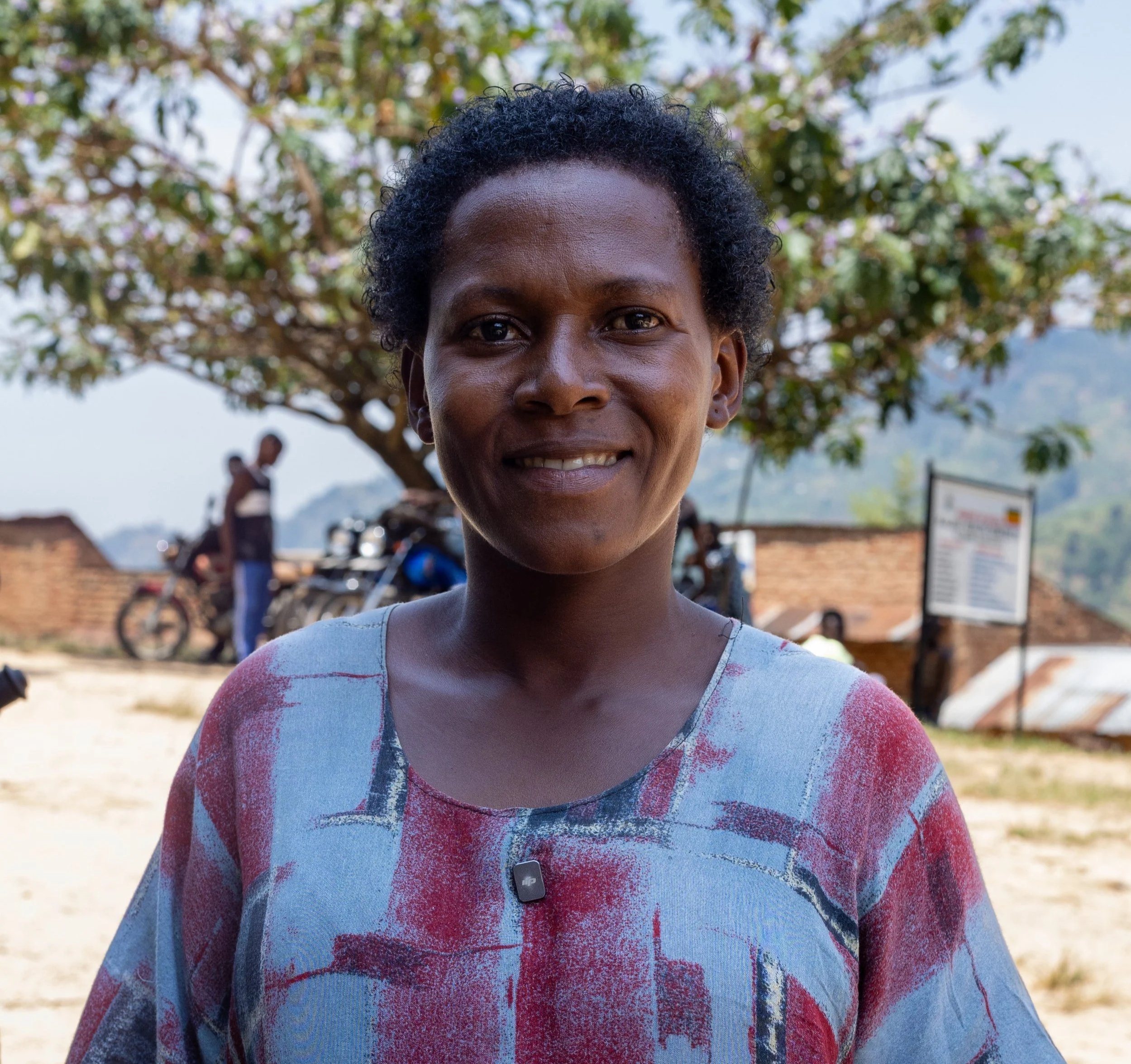
Ms. Nzyabake Raphaelina, a Village Health Team (VHT) member from Kisanga Village, Kibandama Parish.
Kilembe lies along the foothills and valleys of the Rwenzori Mountains in western Uganda, where steep terrain and scattered settlements make travel difficult, particularly for pregnant women in labor and patients who cannot walk. Some homes are accessible only by footpaths, beyond the reach of motorcycles and ambulances. For years, communities relied on improvised carriers and volunteers to bridge the distance between their homes and health facilities.
This challenge prompted BAMA to introduce community stretchers under the Mama Rescue Project, co-funded by Enabel and BAMA USA. The stretchers are now being used by volunteer teams to transport pregnant women and other patients from remote settlements toward health facilities and roads accessible to vehicles, strengthening the connection between isolated households and formal healthcare services.
When the Nearest Health Facility Is Still Difficult to Reach
Kasese District has 143 functional health facilities, including 93 government facilities and approximately 26 Health Centre IIIs, according to District Health Officer Dr. Amon Bwambale. The 2024 National Population and Housing Census puts the district's population at 853,831, while Kilembe Sub-county has 9,444 residents living in 1,988 households. Despite the district's health infrastructure, some mountain communities remain difficult to reach, particularly during medical emergencies.
For Dr. Bwambale, the challenge is closely linked to what health professionals describe as the three delays contributing to maternal deaths: delays in deciding to seek care, reaching a health facility, and receiving appropriate treatment after arrival. The stretchers principally address the second delay, helping women who have decided to seek care but cannot readily reach a facility.
The district recorded 36 maternal deaths in the 2024/25 financial year, compared with 22 in the preceding year. Dr. Bwambale cautions that the increase may partly reflect improvements in reporting rather than a corresponding rise in actual deaths. Nevertheless, the figures stress the importance of ensuring that pregnant women can reach skilled care without avoidable delays.
At Kalibu Health Centre III, these difficulties are familiar to Mr. Justus Kule Mukombi, the Senior Clinical Officer who has headed the facility for more than six years. Women from villages such as Ngangi, Bulimi, Bukangama, and Kibandama often travel along difficult routes for antenatal care, delivery, and treatment. Before the stretchers were introduced, health workers sometimes had to leave the facility to assist pregnant women stranded on their way to care.
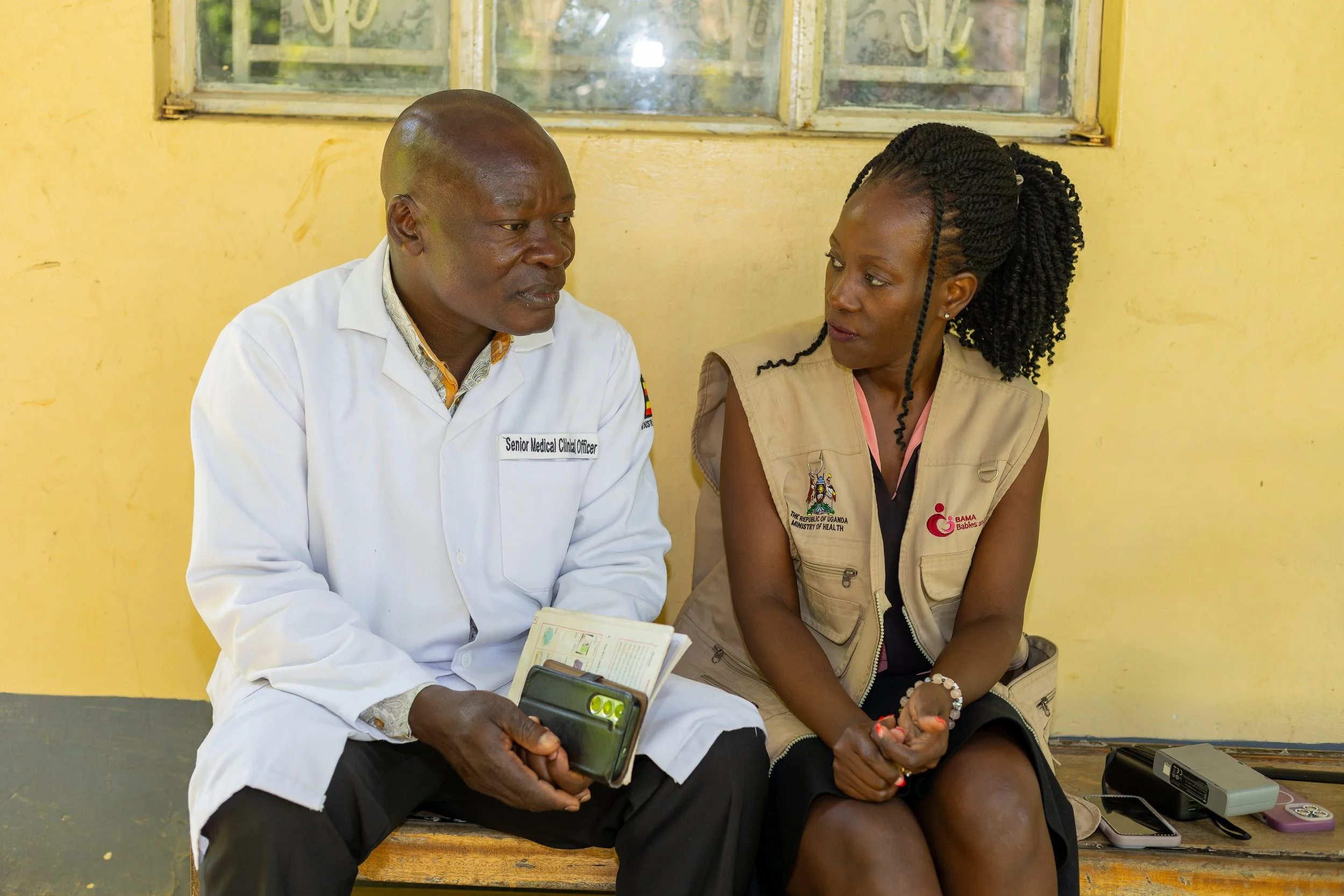
Mr. Justus Kule Mukombi, Senior Clinical Officer at Kalibu Health Centre III in Kilembe Sub-county, Kasese District, interacts with Ms. Stella Nalubowa Murungi, BAMA’s Mama Rescue Project Coordinator, at the health facility.
“We would mobilise our askari, our porters and our midwives to go there, rescue the mother and bring her here,” Mr. Mukombi recalls.
The approximately seven-kilometer road from Kalibu Health Centre III to Kilembe Hospital presents further difficulties, particularly during the rainy season. Patients requiring referral to higher-level facilities must negotiate another stage of the journey.
Dr. Bwambale says the district has been strengthening its emergency referral arrangements, including an ambulance coordination system known locally as the Kasese Model. Under the arrangement, health facilities pool fuel to help ensure that ambulances can respond when needed, with support from partners including BAMA. But vehicles cannot reach every settlement, making community stretchers an important link between mountain households and the ambulance network.
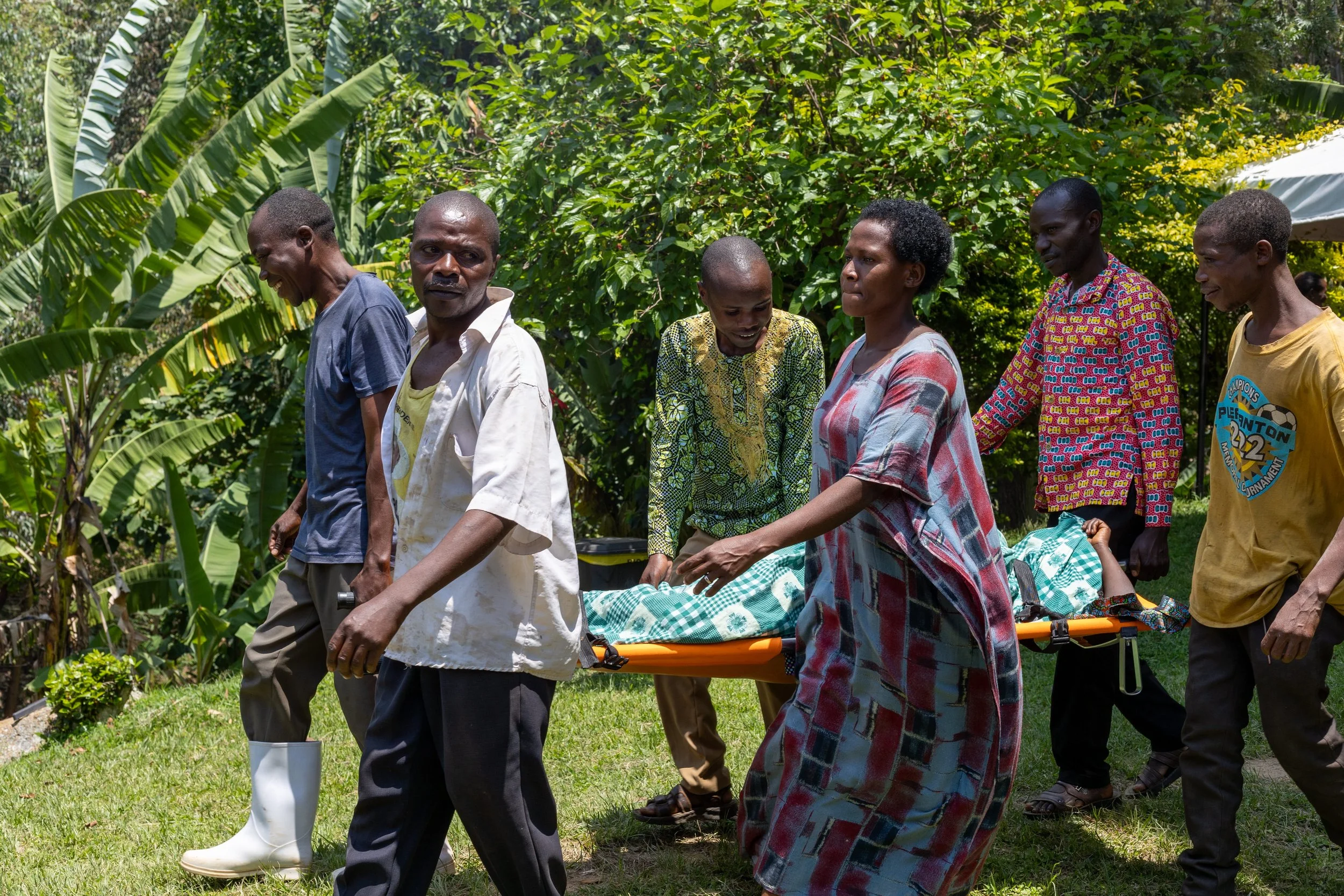
Ms. Nzyabake Raphaelina, a Village Health Team (VHT) member from Kisanga Village, Kibandama Parish, joins community volunteers in carrying a pregnant woman on a stretcher, in a demonstration of how communities support emergency maternal referrals in hard-to-reach areas.
“They also gave out stretchers, so that when a mother is in difficulty in the mountains, the community can use the stretchers to bring her down to where an ambulance can easily reach her and take her to care,” Dr. Bwambale explains.
Ms. Muhindo Loyce Kalombi, Kasese's Assistant District Health Officer in charge of Maternal, Neonatal and Child Health, also identifies transportation and timely referral as important challenges. She recalls women seeking delivery care from traditional birth attendants and subsequently developing complications that required skilled medical attention. She says Mama Rescue's transportation arrangements have helped women reach health facilities and, when necessary, move from lower-level facilities to those equipped to manage complications.
When BAMA introduced Mama Rescue in the Rwenzori region in 2024, the project initially worked with motorcycle riders, taxi operators, and ambulance services to improve access to maternal healthcare. Discussions with health workers, VHTs, and local leaders subsequently revealed that some settlements around Kalibu Health Centre III remained beyond the reach of these transport options.
Mr. John Bosco Ruka, BAMA's Community Liaison Officer, recalls how residents explained the improvised transportation system they had developed.
“The community members told us they had what they called ‘the helicopter’, if I may translate it into English. The ‘helicopter’ is just a piece of wood with a bedsheet.”
Those discussions informed the decision to introduce purpose-made stretchers, building on the community's existing practice of organizing people to transport patients. In March 2026, the project distributed 42 stretchers across Kasese and Kabarole districts. Kasese received 22, including 10 for communities around Kalibu Health Centre III and one for the facility, while another 10 went to communities in Mahango Sub-county and one to Mahango Health Centre. Kabarole received 20 stretchers in Karangura Sub-county, including 18 for communities and one each for Nyakitokoli and Nyabuswa Health Centre IIIs.
The distribution was accompanied by practical guidance on stretcher use and community mobilization. Working through VHTs and local leaders, BAMA supported residents to identify volunteers and organize teams to respond when patients needed assistance.
At Kalibu Health Centre III, Mr. Mukombi reports that more than 20 mothers were brought to the facility through the stretcher arrangement within approximately four months of its introduction. The figure provides an early indication of how the equipment is being used, although it does not establish its effect on maternal health outcomes.
Ms. Nzyabake has also seen the difference in Kisanga Village. She says the stretcher provided to her community is used to transport sick people to Kalibu Health Centre III and, when necessary, toward Kilembe Hospital.
“We thank BAMA for giving us a stretcher that helps us carry sick people we find in the village,” she says.
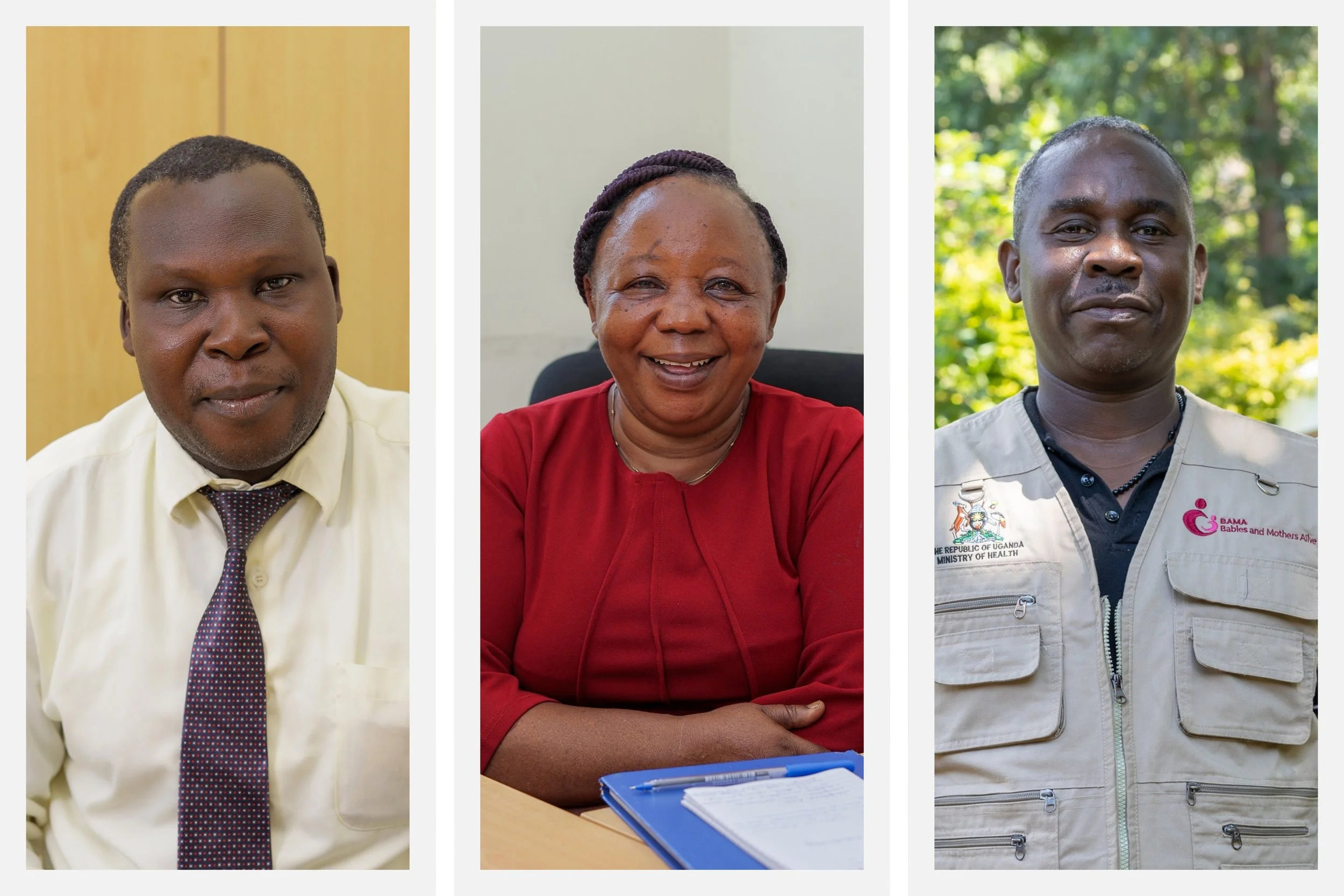
From left: Dr. Amon Bwambale, Kasese District Health Officer; Ms. Muhindo Loyce Kalombi, Assistant District Health Officer in charge of Maternal, Neonatal and Child Health; and Mr. John Bosco Ruka, BAMA Community Liaison Officer. The three highlight the importance of strengthening community transportation and referral systems to improve access to maternal healthcare in Kasese District.
The Volunteers Behind the Stretchers
The stretchers are operated by community volunteers, many mobilized through VHTs and local council structures, who receive no payment for carrying patients. Their work depends on neighbors being available to respond, coordinate their efforts, and help move someone who cannot walk.
Mr. Ruka describes this commitment through ubuntu, a principle of humanity and mutual responsibility. “What befalls me today can befall someone else tomorrow. If I don't come through to help someone, tomorrow I may not find someone to come through for me.”
Community involvement has been central to how the initiative operates. Residents have participated in identifying transportation challenges, selecting volunteers, and managing the stretchers. Ms. Stella Nalubowa Murungi, BAMA's Mama Rescue Project Coordinator, considers this involvement important for sustaining the arrangement.
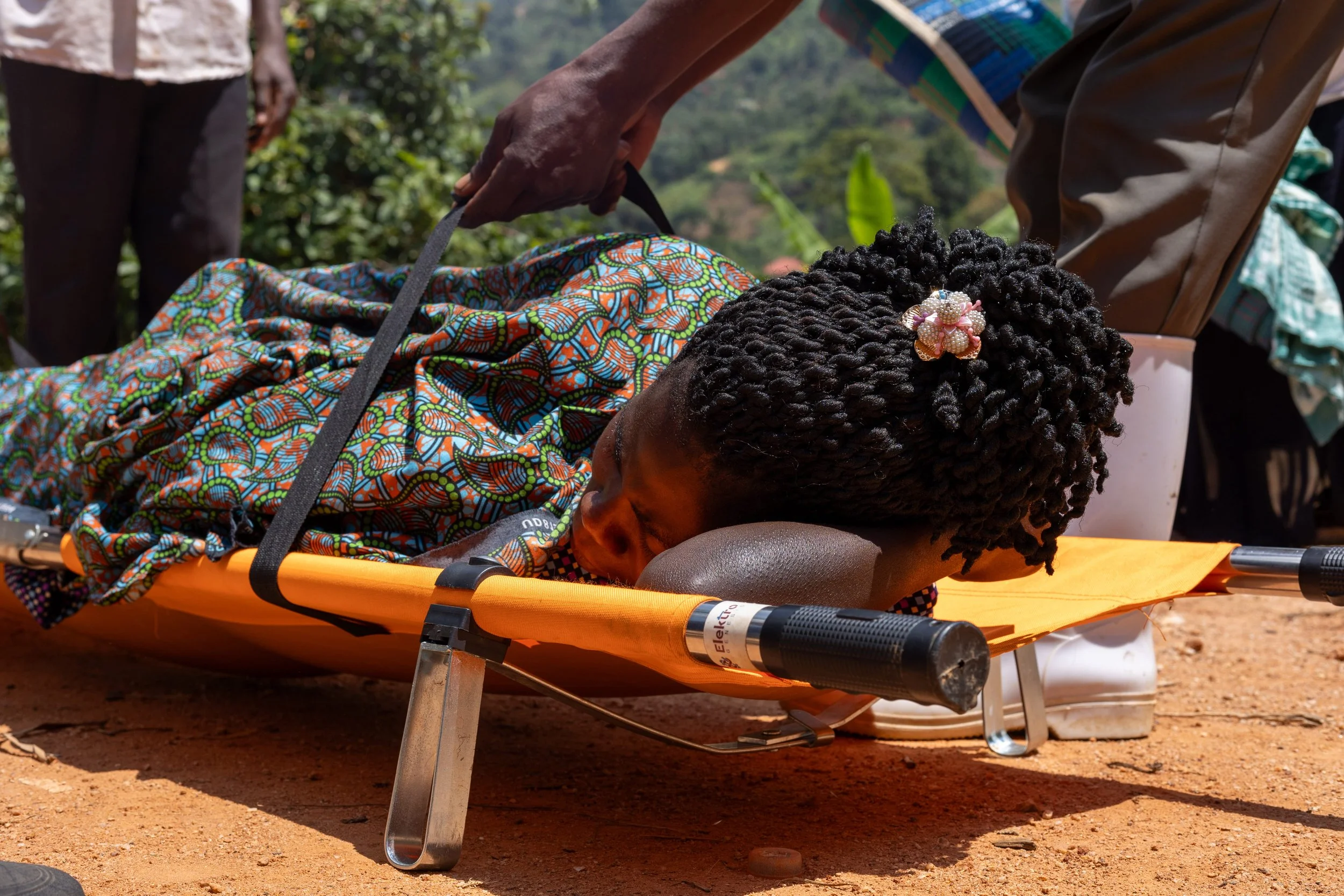
A community volunteer secures a woman on an emergency stretcher during a demonstration of how communities can safely transport pregnant women for emergency medical care in hard-to-reach areas of Kilembe Sub-county, Kasese District.
“If you involve the community from the onset of a project, they feel they truly own it, because at the end of the day, the project is theirs.”
At Kalibu Health Centre III, Mr. Mukombi has observed greater involvement of men in transporting patients following engagement with families, although he says the teams still need additional volunteers and refresher training. The initiative also complements the work of VHTs such as Ms. Nzyabake, who encourage antenatal care, monitor newborns, promote immunization, and advise families when to seek medical attention.
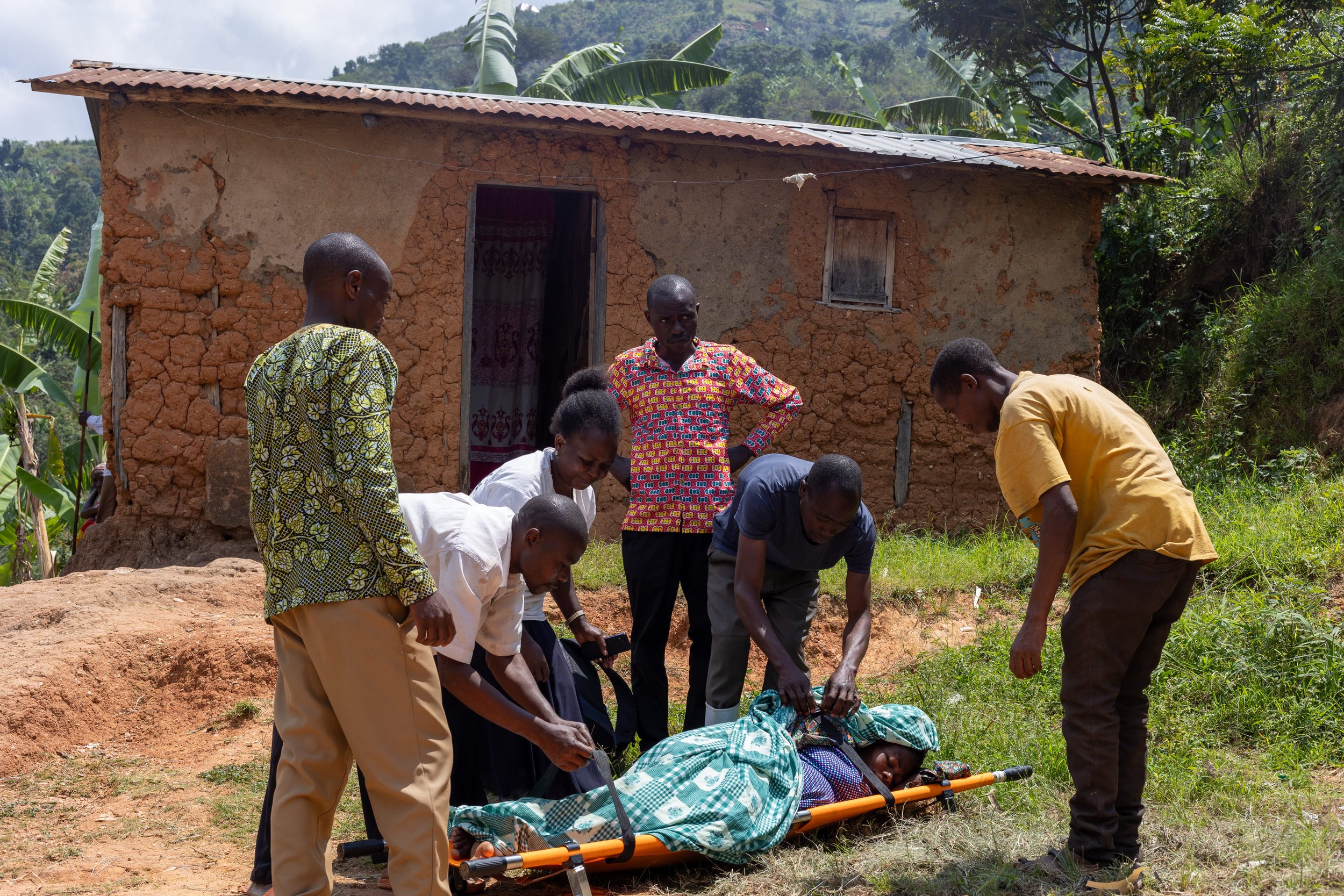
Community volunteers prepare a woman for transport on an emergency stretcher outside a rural home in Kilembe Sub-county, Kasese District, as part of a demonstration of how communities organise emergency referrals for pregnant women in hard-to-reach areas.
For Ms. Kalombi, sustaining transportation and referral support is particularly important as the district considers how to serve communities beyond the project's current reach. She says BAMA's wider Mama Rescue support has covered 12 of Kasese's 44 lower local government areas and calls for its expansion to additional underserved communities. Her concern extends beyond the stretchers to the broader transportation, savings, and referral arrangements that have helped women seek care.
Dr. Bwambale similarly emphasizes that the stretchers form part of a wider response to maternal healthcare barriers, alongside ambulance coordination and maternity waiting facilities intended to help women from remote communities reach care before labor begins.
Some villages remain without stretchers, while poor roads and limited ambulance access continue to complicate referrals. Mr. Mukombi has called for additional stretchers and better ambulance access for patients requiring treatment beyond Kalibu Health Centre III. The community initiative cannot replace these services, but it provides a means of getting patients from inaccessible settlements to locations where conventional transportation becomes possible.
For Ms. Nzyabake and the households she serves in Kisanga Village, the change is evident in how residents respond when someone falls seriously ill. Previously, neighbors gathered bedsheets, mattresses, and pieces of wood to carry a patient. They now have a dedicated stretcher and volunteers who can help move that person toward care.
The mountain paths are the same ones families have used for years. What has changed is what residents have available when they need to carry someone along them.
